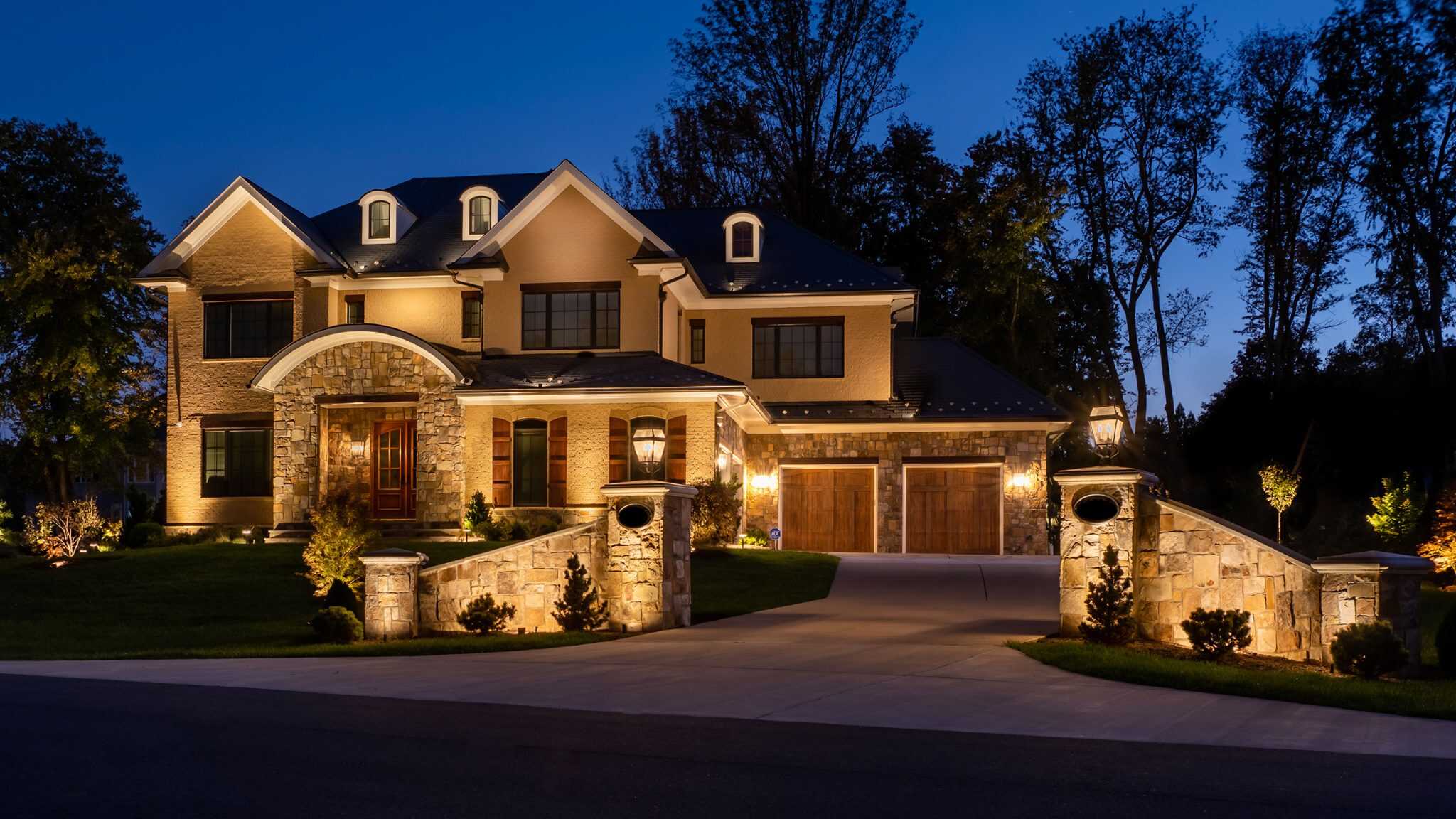
Location: Private Residential Community, Northern Virginia
Homes Featured: Three neighboring residences
Designers: Dayloom (Homes 1 & 3), Competitor Firm (Home 2)
Overview
In a quiet, tree-lined neighborhood in Northern Virginia, three neighboring homes were professionally lit. Two were designed and installed by Dayloom. The third, managed by another lighting firm, used similar premium luminaires and had a comparable scope. Yet when viewed at night, the difference in outcome is clearly visible—and telling.
Design Objectives
- Highlight architectural features with precise, balanced illumination
- Emphasize each home’s entrance as the central focal point
- Maintain consistent light color and source performance throughout
- Integrate landscape lighting naturally into the overall composition
- Eliminate glare and hotspots, while creating a cohesive nighttime appearance
Lighting Comparison
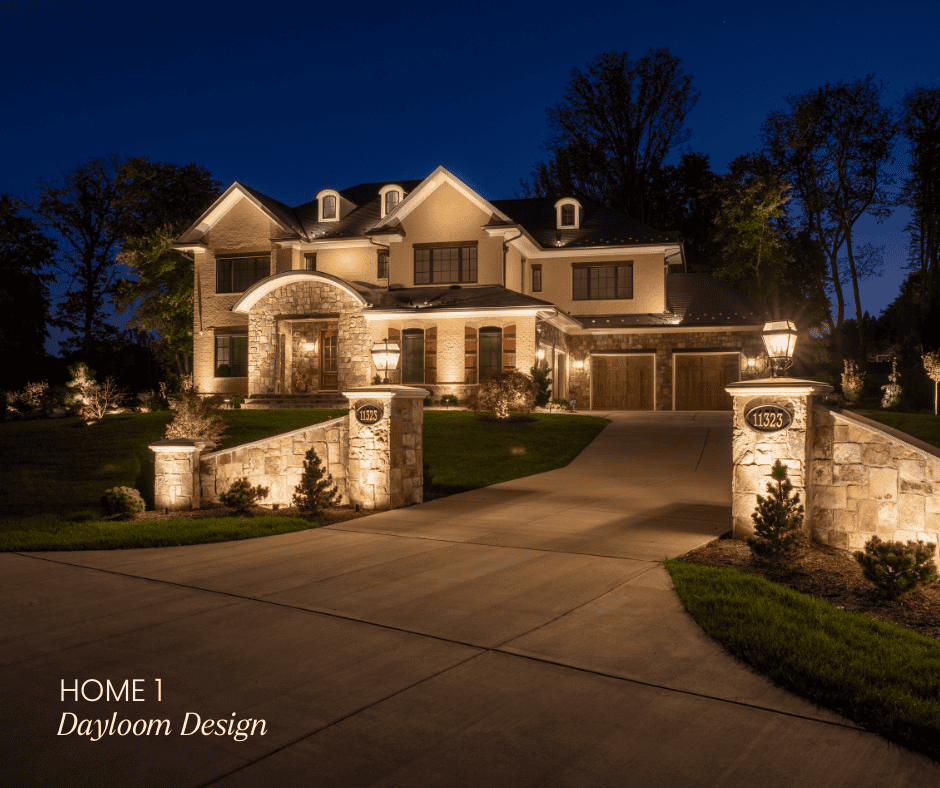
Home 1 (Dayloom Design)
- Clean, vertical coverage from ground level to second story, achieved without visual glare
- The entrance serves as the focal point, drawing guests in with a warm, balanced glow
- Matched light sources ensure the color is consistent from the ground floor to the upper dormers
- The lighting on stonework is even and texturally accurate, with no “blowout” or harsh transitions
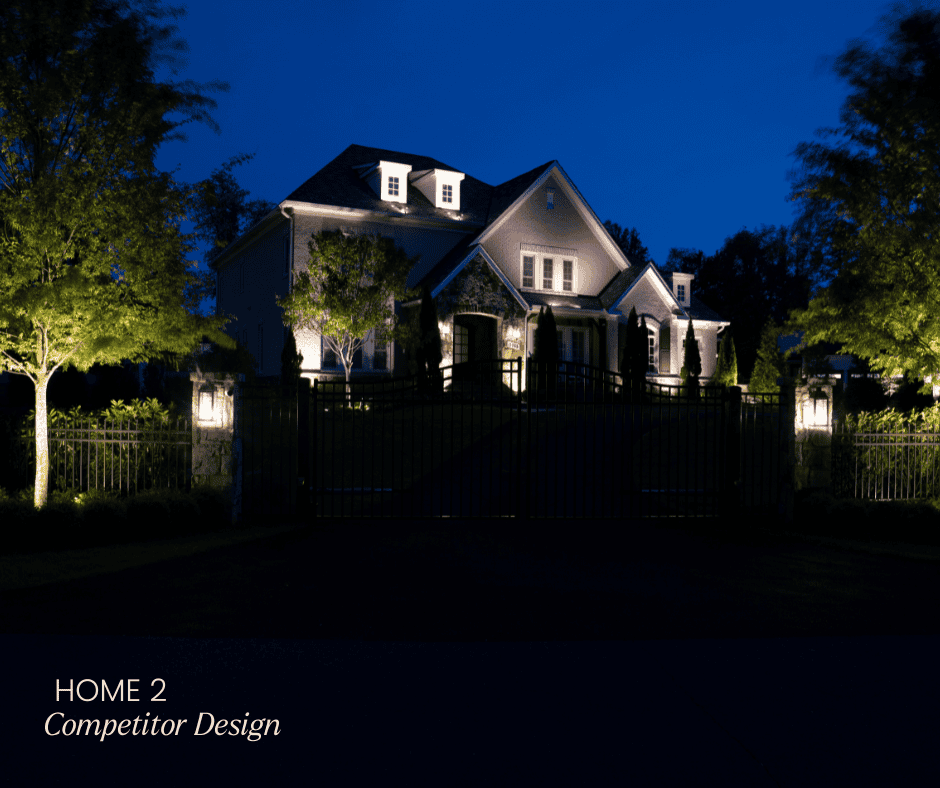
Home 2 (Competitor Design)
- Light on the left side of the home fades rapidly—intense at the base, weak by mid-facade
- The entrance, which should visually invite, is underpowered and easily lost
- A visible color shift at the main peak and dormer lights draws unintended attention upward
- Uneven beam performance and unmatched Kelvin temperatures diminish the design’s coherence
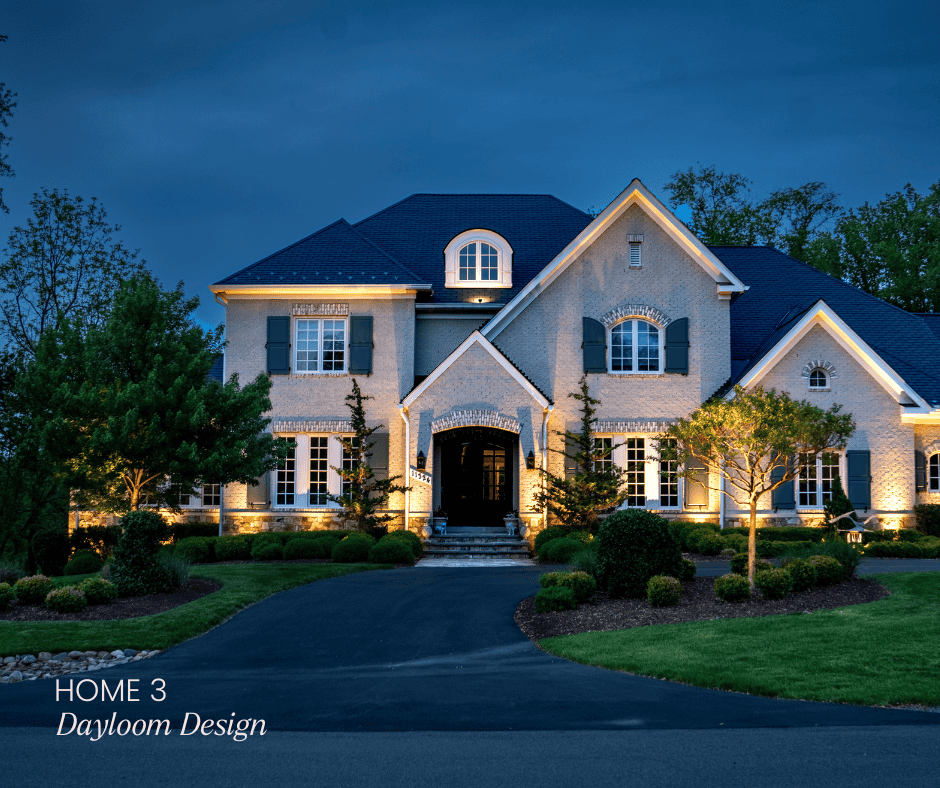
Home 3 (Dayloom Design)
- Seamlessly integrates lighting into architectural and natural elements
- Embraces shadows where appropriate, especially where plantings create natural texture on the facade
- Consistent color, beam control, and visual hierarchy reinforce the home’s grand entrance and layered design
Beyond the Fixture: The Role of Optics and Control
One of the most overlooked but critical elements in lighting design is how the light behaves once it leaves the luminaire. It’s not enough to choose a reputable brand, or even to match color temperature and lumen output. The true artistry—and performance—lies in light control.
At Dayloom, we only use luminaires that have been third-party photometrically tested. Why? Because optics matter.
We consider:
- Beam spread and throw pattern: Does the light reach the architectural feature evenly?
- Distribution and spill: Are we getting unwanted glare or light trespass?
- Candela and intensity maps: Does the light taper gradually or drop off abruptly?
- Optical lensing and shielding: Are we in control of visual comfort and beam edge?
This level of technical discipline separates professional lighting design from commodity installation. It ensures every beam of light reinforces the visual intent.
What Sets Dayloom Apart
- Photometric Precision: We never guess. We specify.
- Purpose-Driven Placement: Every luminaire has a reason for being there—and a goal to achieve.
- Consistent Color and Control: One lighting family, one visual language.
- Design for the Eye: Entrances lead the eye naturally, not by accident.
- Shadow as Texture: We use darkness strategically, not fearfully.
Conclusion
This study proves what we’ve always known: great lighting design isn’t just about the products you use—it’s about how you use them.
From fixture selection to photometric evaluation, Dayloom’s approach is rooted in intentionality, precision, and design leadership. In this neighborhood, all three homes are lit. But only two are elevated.