

By Patrick Harders, LC, Founder & Principal Lighting Designer, Dayloom
If you’re considering landscape lighting for your Northern Virginia home, your first question is probably simple: How much should I expect to spend?
I’ve designed and installed landscape lighting in Northern Virginia since 2001. I’ve worked on everything from relatively simple front yards to elaborate estates with mature trees, swimming pools, stone terraces, and extensive outdoor living spaces.
The honest answer is that professionally designed and installed landscape lighting typically costs $4,500 to $17,500 for many residential projects, while more complex properties can require $17,500 to $43,000 or considerably more.
Before we get into the details, I want to acknowledge that my company isn’t the right fit for everyone. Many homeowners choose to save money by installing landscape lighting themselves. I understand and applaud that decision. I’ve tackled plenty of DIY projects around my own home, with varying degrees of success!
This guide focuses on professionally designed and installed systems. DIY can cost substantially less, but the two approaches aren’t directly comparable when you consider design, equipment, wiring, controls, and labor.
In a professionally installed system, labor and installation-related costs can account for roughly 50% of the total investment, depending on the project’s complexity and equipment selection.
Here’s what our clients typically invest and what determines where your project falls within these ranges.
2026 Landscape Lighting Cost Ranges in Northern Virginia
| Project scope | Typical investment |
|---|---|
| Front or back of many standard homes | $4,500–$9,500 |
| Front and back of many Northern Virginia homes, or one side of a larger property | $9,500–$17,500 |
| Mature landscapes, developed backyards, pools, patios, and outdoor living areas | $17,500–$43,000 |
| Estates, extensive established grounds, and commercial properties | $43,000+ |
These are typical investment ranges, not fixed prices. The final cost depends on your property’s features, design scope, fixture quality, wiring requirements, controls, and installation complexity.
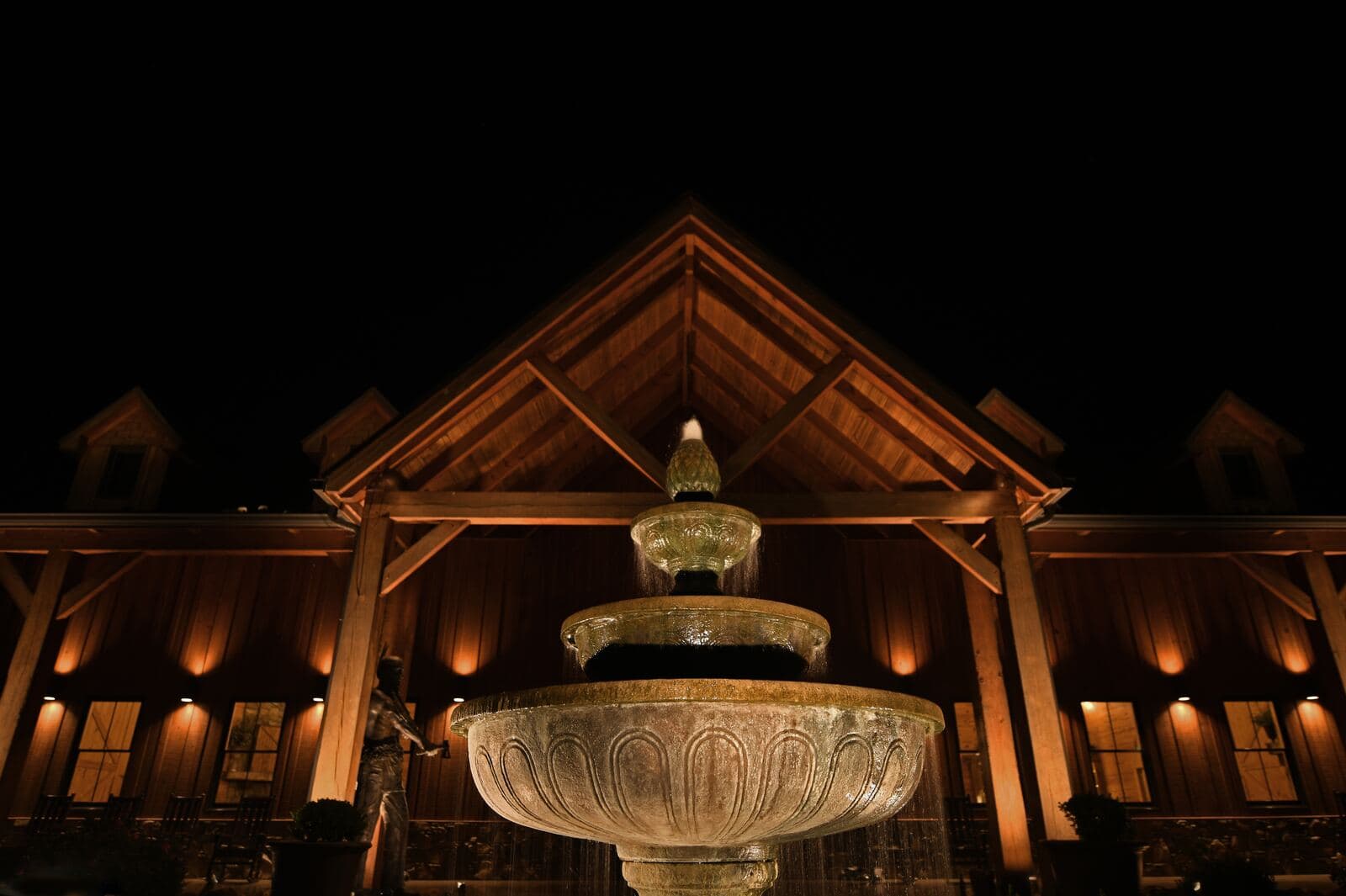
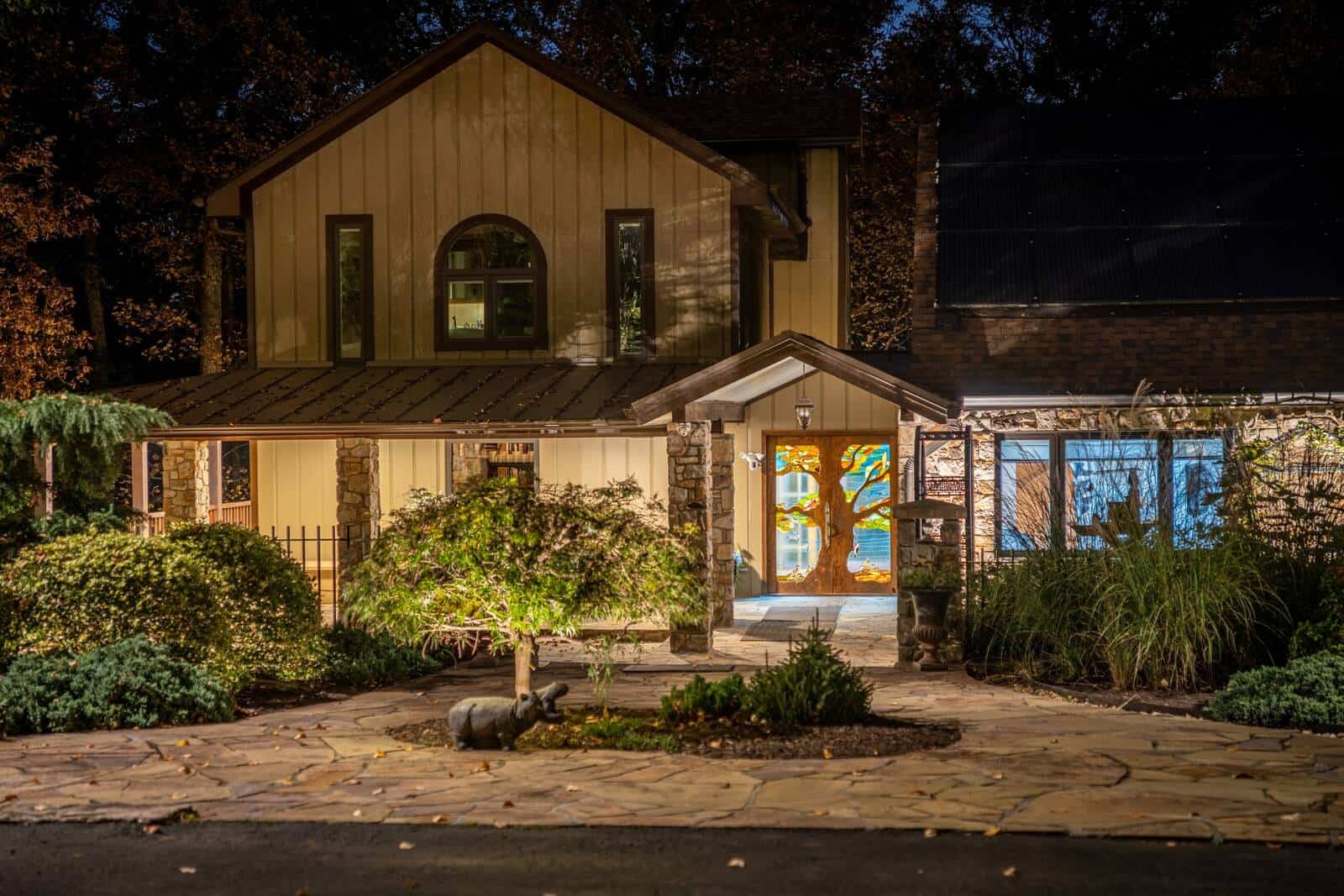
A newer home in Ashburn with young plantings and a simple front facade differs greatly from a Great Falls property with mature oaks, extensive stonework, a swimming pool, and developed outdoor living areas.
Landscape lighting costs depend less on square footage than on what you want to illuminate and the experience you want to create after dark.
What Should You Budget for Landscape Lighting?
Two rough benchmarks can help you establish a starting budget:
- About 10% of your landscaping or hardscaping investment. If you’ve invested $150,000 in a patio, retaining walls, and plantings, a $15,000 lighting budget is a reasonable starting point.
- About 1% of your home’s value. This is another budgeting reference, though the right investment varies widely by property and project scope.
These aren’t formulas or guarantees. They’re simply ways to start thinking about an appropriate investment before you discuss your specific property with a designer.
Why Do Landscape Lighting Prices Vary So Much?
Several reasons can make two proposals for the same property differ by thousands of dollars.
1. Installation versus a fully documented lighting design
One of the biggest differences isn’t the number of fixtures. It’s the planning behind the system and what you receive when the project is complete.
Many contractors develop their lighting layouts as part of the installation process, identifying fixture locations and equipment requirements on site. This can work well for straightforward projects. If you’re weighing these approaches, our guide on how to choose a landscape lighting designer explains what to look for.
A comprehensive lighting design goes further. At Dayloom, we plan how the property should look after dark and provide documentation to guide the installation and preserve the design intent.
Depending on the project, our deliverables include:
- Lighting plans and drawings showing fixture locations and the features they are intended to illuminate.
- Conceptual renderings that help homeowners visualize the proposed nighttime effect before committing to the installation.
- Fixture schedules and specifications identifying the selected equipment and its intended application.
- Wiring diagrams and system planning addressing wire sizing, voltage drop, circuit layout, transformer capacity, and control requirements.
- As-installed photographs and maintenance documentation that help homeowners understand the completed system and locate buried wiring in the future.
Not every property needs the same level of documentation. A simple front-yard project may not require the same planning as an estate with extensive hardscaping, pools, and mature trees.
However, these deliverables take time and expertise, and that work is part of the investment. When comparing proposals, ask what you’ll receive beyond the installed fixtures. A fixture layout and a fully documented lighting design are not necessarily the same service.
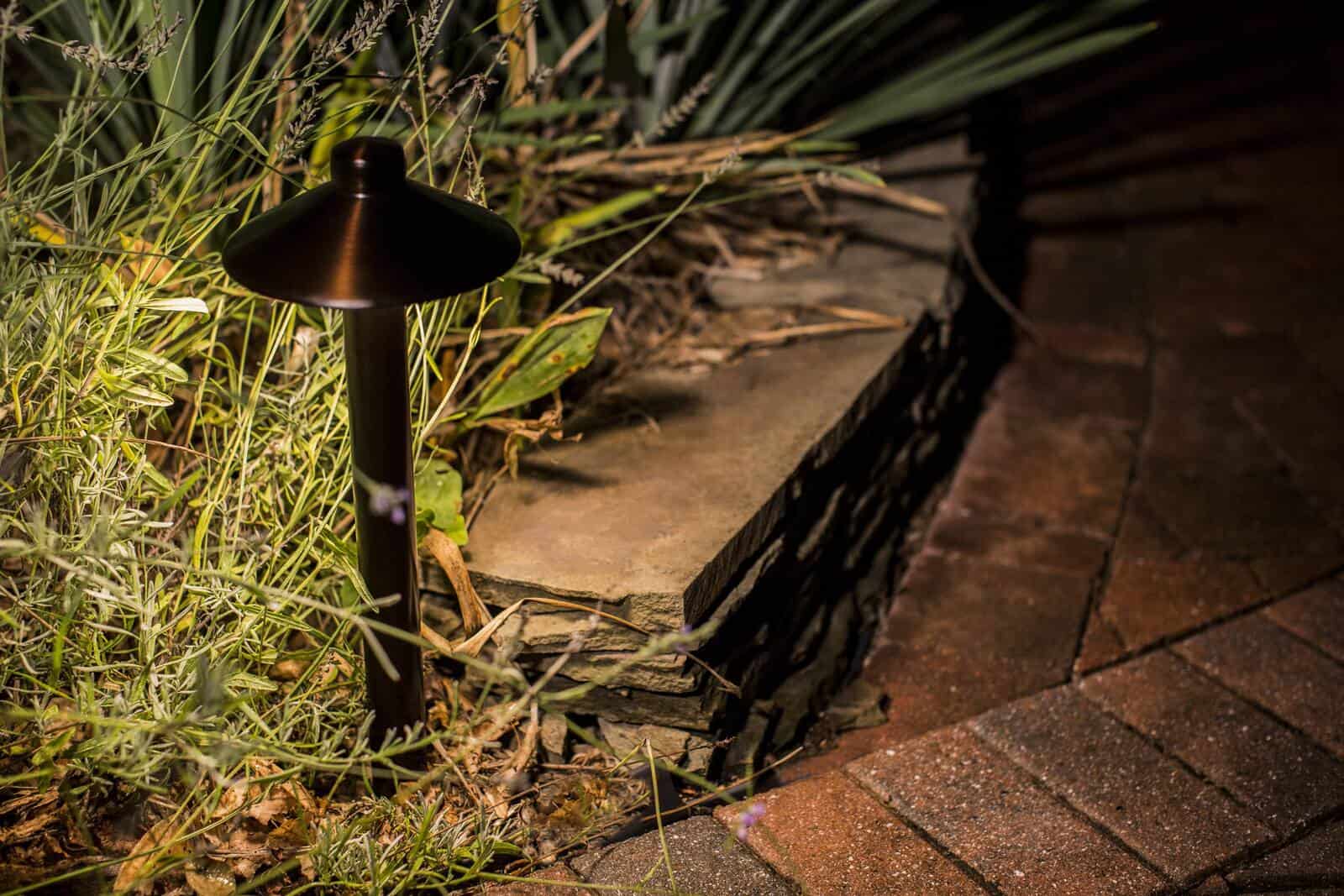
2. Fixture quality
Landscape lighting fixtures vary dramatically in price and performance.
A lower-cost fixture might cost $25–$45, while a specification-grade luminaire can range from $300 to $1,000 or more.
Differences include housing materials, weather resistance, optical performance, glare control, and long-term serviceability. For example, solid brass and 316 stainless steel generally offer different durability characteristics than inexpensive plastic or thin aluminum alternatives.
Quality optics and glare control also matter. The goal isn’t simply to make a property brighter; it’s to illuminate the right features without creating distracting glare or unwanted light.
I also co-founded Sterling Lighting and serve as its CEO. Sterling designs and manufactures Dayloom’s fixtures, which are also used by lighting professionals across the United States and Canada. We developed our fixtures to meet the standards our own designs require. Our IN27 path light won a 2025 LIT award for product design.
We believe homeowners should have access to exceptional performance and durability at a competitive price. Premium equipment isn’t necessary for every application, but understanding what you’re buying helps you make an informed decision.
3. Wiring, transformers, and controls
The components you don’t see can significantly affect cost and reliability.
A properly designed low-voltage system accounts for wire length, electrical load, voltage drop, transformer capacity, and connection methods. Long wire runs, extensive properties, and complex layouts may require additional cable, circuits, or transformers.
Quality connections, properly sized direct-burial cable, and appropriate controls also contribute to long-term performance.
These details may not show up in nighttime photos, but they can determine whether a system performs consistently for years or develops problems that require troubleshooting and repairs.
4. Your property and landscape
The property itself can dramatically affect installation costs.
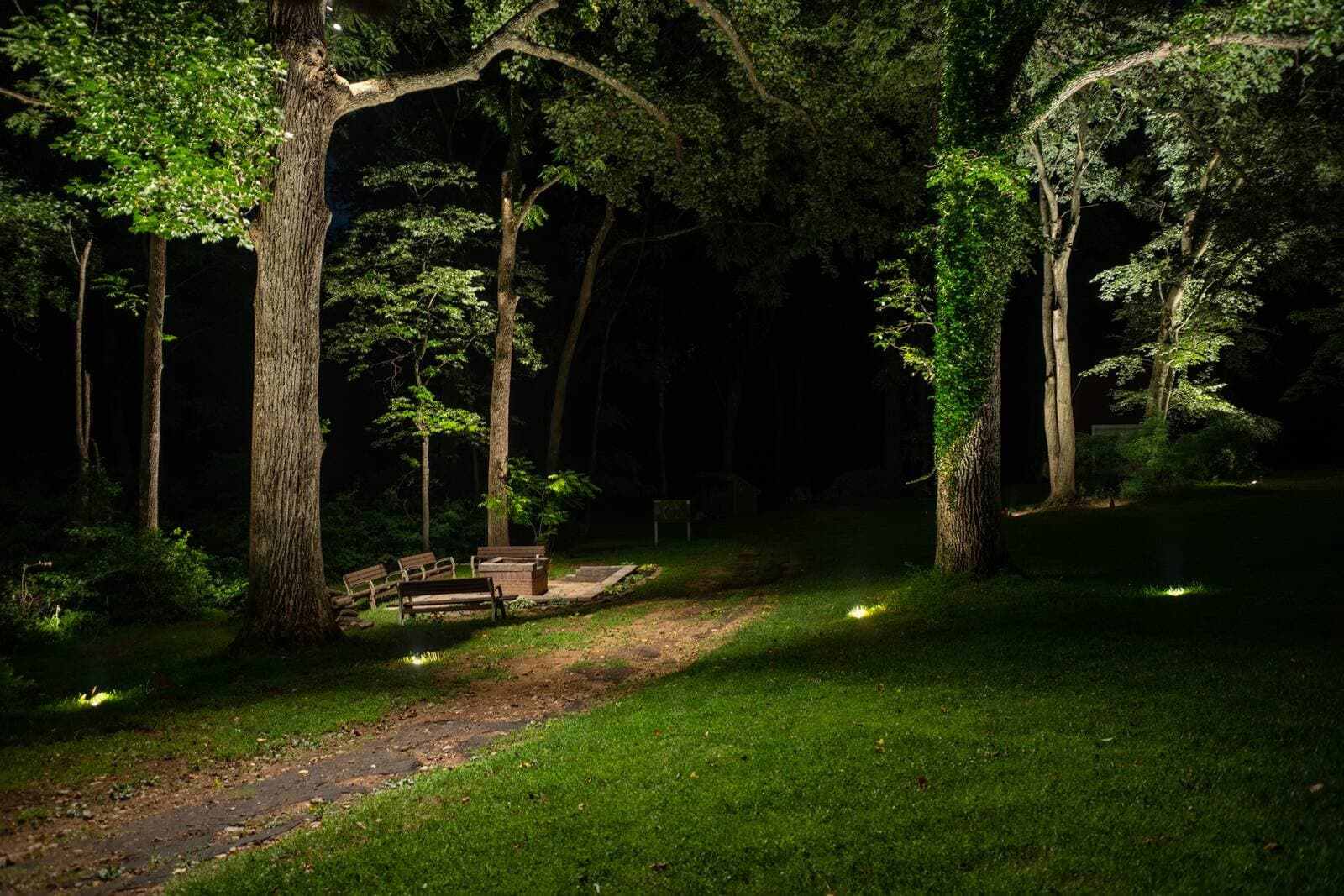
- Mature trees: Large canopies may require carefully positioned fixtures, elevated mounting locations, and specialized installation techniques.
- Hardscaping: Retaining walls, steps, patios, and outdoor kitchens may require integrated fixtures or coordination before construction is complete.
- Pools and water features: These introduce additional planning and application requirements.
- Distance and terrain: Long runs to detached structures or distant landscape features increase wiring and installation requirements.
- Soil conditions: Rocky ground can make installation more labor-intensive.
Planning lighting before a patio, wall, or pool is completed can also prevent unnecessary costs and improve the final result.
How Much Does Landscape Lighting Design Cost?
At Dayloom, your complete design is free. You get a scaled drawing, a design visit, photo renderings, working documents and a detailed proposal before you commit to anything.
There is no separate design fee, and a deposit is due only once you sign a contract.
When comparing companies, distinguish between an initial concept, an installation layout, and a comprehensive lighting design. Before deciding, ask what drawings, renderings, specifications, and wiring documentation are included.
What Does Landscape Lighting Maintenance Cost?
Every outdoor lighting system requires periodic attention. Plants grow, mulch builds up, and fixtures can shift or become obscured over time.
Typical maintenance includes:
- Re-aiming and repositioning fixtures.
- Cleaning lenses and clearing debris.
- Checking connections, voltage, and transformer settings.
- Adjusting timers and lighting controls.
The cost depends on system size, accessibility, and the work required. Quality fixtures and proper installation can help keep maintenance focused on adjustments rather than repeated repairs.
Ask prospective contractors about their maintenance services and warranty terms. Dayloom warranties are transferable to the next homeowner after inspection, which can be valuable if you eventually sell your property.
How to Get an Accurate Landscape Lighting Estimate
Before requesting proposals, consider these four steps:
- Gather information. Photos, property surveys, and landscape plans help you communicate the project scope.
- Establish priorities. Decide whether you want to emphasize curb appeal, mature trees, pathways, patios, pools, or outdoor living areas.
- Plan early. If you’re building a patio, pool, or retaining wall, involve a lighting designer before construction is complete.
- Compare the complete proposal. Look beyond fixture counts and total price. Compare equipment, design deliverables, wiring methods, controls, warranties, and installation documentation.
The goal is to understand what each company is proposing so you can compare them meaningfully.
Frequently Asked Questions
How much does landscape lighting cost in Northern Virginia?
Many professionally installed projects fall between $4,500 and $17,500. Mature landscapes, pools, extensive patios, and outdoor living areas can range from $17,500 to $43,000, while estate and commercial projects can exceed $43,000.
Is professional landscape lighting worth it compared with DIY?
DIY is an option, and it can save on installation costs. It also has real drawbacks: design and fixture placement are hard to get right, glare and light trespass are common, store-bought fixtures often don’t last, wiring mistakes and voltage drop cause dim or failing lights, and there’s no warranty or service behind the work.
Why do landscape lighting quotes vary so much?
Differences often reflect fixture quality, design services, wiring and transformer requirements, installation complexity, and documentation. Ask what each proposal includes before comparing prices.
Does Dayloom charge for lighting design?
No. Your complete design is free: a scaled drawing, a design visit, photo renderings, working documents and a detailed proposal. A deposit is due only once you sign a contract.
How much should I budget for landscape lighting?
As a starting point, consider approximately 10% of your landscaping or hardscaping investment. Your property’s features and lighting goals ultimately determine the appropriate budget.
Does Dayloom install holiday or permanent lighting?
No. Dayloom focuses on landscape and architectural lighting design and does not offer holiday or permanent lighting.
About the Author
Patrick Harders, LC, is the founder and principal lighting designer of Dayloom and CEO and lead fixture designer of Sterling Lighting. He has designed landscape lighting since 1998 and has served clients in Northern Virginia since 2001. His work has earned three international LIT awards and eight North American AOLP awards.
Ready to see what your property could look like after dark? Get My Free Design Plan or call 703-636-5225.


